Saturday, September 13, 2008

Surface Treatment Shop


A sampling of all the surface treatments originally available in the shop. Several have been discontinued due to EPA regulations.


Some baskets for dipping items into the plating baths.


Some of Steve's parts, before surface treat.


And after.


Kind of hard to see, but some of them hanging on a titanium dipping tool. The titanium turned purple in the bath.


Something being dipped in a small bath.


The large baths are a bit scary.


This is an empty one. Amazing how deep it is.


One filled to the top, and bubbling.


More small baths.


The paint booth. Large fans draw the paint down through the grating in the floor. Note the large crane hook in the ceiling, and the garage door at the back.

NASA's Small Sewing Room

Spools of thermal blanket material. Yes, one roll is like those "space blankets" you can buy in a sporting goods store.


A thermal blanket, that became obsolete when the design changed.


Some more examples of thermal blanket work.

The Shop at NASA/MSFC, Huntsville, Bld 4705

Walking towards the big machine shop, which is on the left, you can see a rocket on display in the distance. The building to the right is the "surface treatment" shop.


I just imagine seeing a Saturn V roll out these doors... how cool that must have been.


The neutral buoyancy simulator is attached to the shop. The control room is in the low part of the building.


The buoyancy tank is in this huge building. It is an indoor "swimming pool" large enough to hold a mock-up of the shuttle bay. It was equipped for training the crew for EVA (space walks). There would be one or two suited MSFC employees in the tank, with several scuba divers to assist, for the "dress rehearsals", before the astronauts came and suited up.

Sadly, the facility is now "mothballed". It has "historical landmark" status, so at least it will not be dismantled. Von Broun had a suit, and would go in himself whenever he chose to. Dad says Von Broun would ask Cooper to suit him up, and Cooper would say "I don't know if I have one that will fit you", then he'd go get Von Braun's custom-fit suit. JSC now has their own facility, which is at least partially why this one has been shut down.


Check my other posts for what's inside the shop.

A Variety of Tools

Here are some of the items we saw on the tour. The first is a piece of hardware designed by Brian, I believe.


One of the ceiling cranes, moving over to pick up the above part, and take it to a milling machine for further work.


Following is a new machine they are installing. It has one rotating chuck for holding a part, one large multi-tooled head, and a second head for another tool. It is capable of cutting hexagons, for example, by spinning and maneuvering in unison. I wish it was running, so we could have seen it, but we'd probably only have seen a bunch of coolant spraying the window if it was.


This one cuts with a wire.


And this oddity was electrically burning an elliptical hole into a part, while submurged in a special fluid. Puffs of smoke come up out of the fluid bath as the machine hisses up and down, and smells of solder or "magic smoke". They showed us that drops of water sink to the bottom, and sit beaded up at the bottom of the tank.

Quality: measurement equipment

This lab is filled with a variety of nice measuring tools, on large stone tables.


This is a shadow-graph type machine. It projects an enlarged shadow of complex-shaped parts, like screw threads, so that they may be measured and verified more easily.


I believe this is called a coordinate measurement machine. It touches a part on the table, and records the coordinate. In this way, it maps out a part and can compare it to a solid model of that part, or the coordinates can be converted into a solid model.


Various items used for the above machine.

Cleaning Room

Ok, you're walking through a gigantic shop, complete with its share of metal chips and grease. Then you walk through a door into... a room made of gleaming stainless steel. Pristine, people through glass windows wearing white bunny suits. It was, er, a surprise. This is the place where they micro-clean the already cleaned items, and then measure how clean they got it. The place looks stunning.


This is the "foyer", on the "dirty" side of the door. We did not enter the clean room area.

Massive milling machine

More machines in the NASA/MSFC shop in building 4705. This milling machine has an impressively large bed.


This roller from the sheet metal area was used to roll the above parts.


Thursday, September 11, 2008

Water Table at MSFC

I went on a tour of the shop facilites at NASA/MSFC today. This small building houses a really cool water cutting machine. It cuts with a high pressure jet of water, with crushed garnet mixed in. They let us feel the garnet. The courser powder felt like fine sand. The finer powder felt like, well, powder.

It can make a 9" cut in a single pass.


Below, the table, with two of the guys checking it out.


The table is filled with water. The "bed" is a bunch of cheap metal slats, on-edge, which routinely get cut up by the machine, and then get replaced. They sometimes have to weight down the material that is being cut, because the water from the jet will push down into the bath and push back up on the bottom of the material, making it float off of the slats.


This NASA "meatball" was cut by the water table. The keyboard is part of the control console.


I assume the pink horse was cut on it too, since it was sitting nearby.


Here are the scraps, where many pieces were cut out of single sheets of material. That's not much waste.

Thursday, January 27, 2005

Real-time models


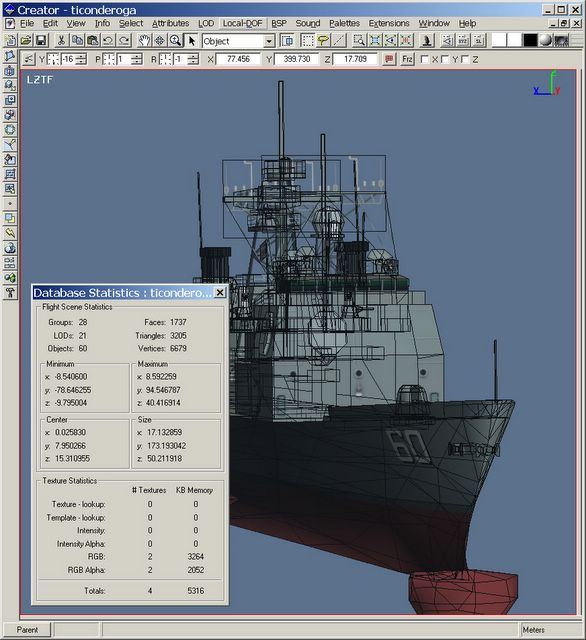
My real-time version of the Ticonderoga-class AEGIS cruiser, "USS Normandy", which resides in the Facets model library. Shown here in Creator, with textures and fog turned on.


This is my Normandy, with textures turned off. Many features are painted on the texture, and are not modeled with geometry.


The Normandy, shown here in Creator with a model statistics panel, and wireframe display turned on.

Some Facets Models that I Made


Hibernia oil platform.


M1083 FMTV Standard Cargo Truck, designed to transport cargo and soldiers.


P-3C Orion anti-submarine and maritime surveillance aircraft.


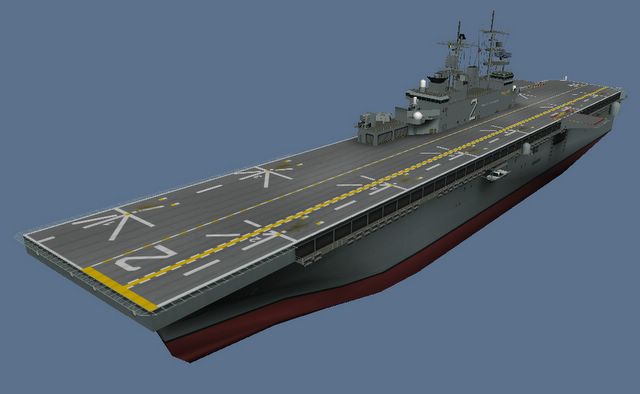
LHD-2 Essex Wasp class carrier, the largest amphibious ships in the world.


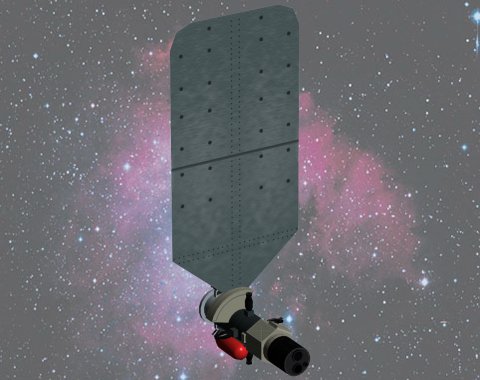
Kinetic Energy Anti-Satellite KE ASAT; model was made for hardware-in-the-loop simulation.


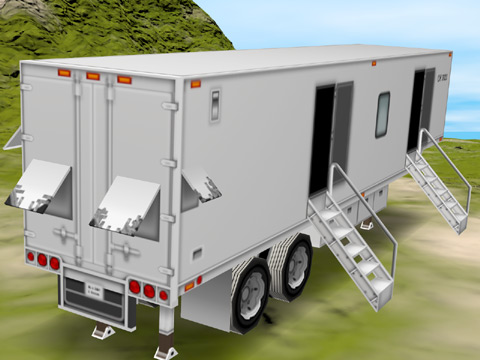
"Battle Command Post" trailer.

Tuesday, January 25, 2005

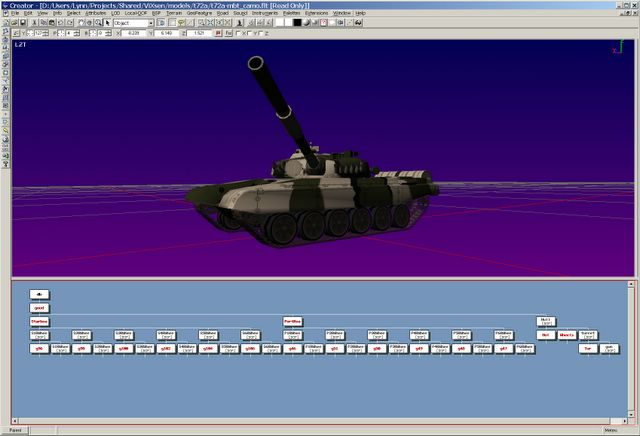
Scripted T72 Visual Model


I set up this real-time visual model with extensive articulations and a script for realistic track and wheel animation. The Python script queries the Mantis IG to determine velocity, and animates the wheels at the appropriate speed. Terrain roughness is also simulated with a scalable wheel bounce and rocking of the hull. A separate script handles barrel recoil for weapons fire.


T72 Tank Creator screenshot, showing hierarchy/scene graph.

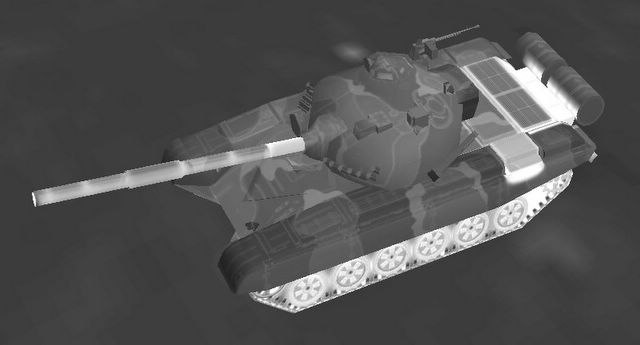
T72 Model for Dynamic NVG and IR Sensor Mode

Starting with the visual T72 texture set, I proceeded to identify surface properties, base materials, and thermal systems. The resulting "material classified" model is used in Infra Red (IR) and Night Vision Goggles (NVG) simulations. The physics is calculated in real time by viXsen, and the model changes according to time of day (thermal load) and selected sensor mode. This model is featured in the viXsen demo scenario.


This is the T72 rendered in Night Vision Goggles (NVG) mode in real-time by the viXsen sensor plugin for Mantis IG.


Here is the T72 in Infra Red (IR) sensor mode, early in the morning (no solar load). Notice the camo pattern has vanished. The textures used here are the same ones used to produce the NVG image; only the sensor mode in viXsen was changed.


This screen capture is with solar load, plus hot engine, tracks and barrel. Notice the solar load on the paint caused the camo pattern to be visible. Again, the same textures are used. The only change is viXsen time of day.